
Bifacial gain
Glint ground supports bifacial panels in the PV analysis. This page will explain how to use bifacial panels in Glint Ground, what calculation model is used, and the accuracy of this model up to other models.
Here is a video on how to include the bifacial gain in the analysis:
https://share.vidyard.com/watch/CEkN8Mhm8VhrAhpuYgD5UY
What is bifacial?
Most new solar panels used today in ground utility pv are bifacial panels. A bifacial panel can convert the irradiation on the back side of the panels to electricity. A monofacial panel can only make use of the irradiation on the front side of the panels. See figure 1 below to see some irradiance also arrives on the back side of the panel.
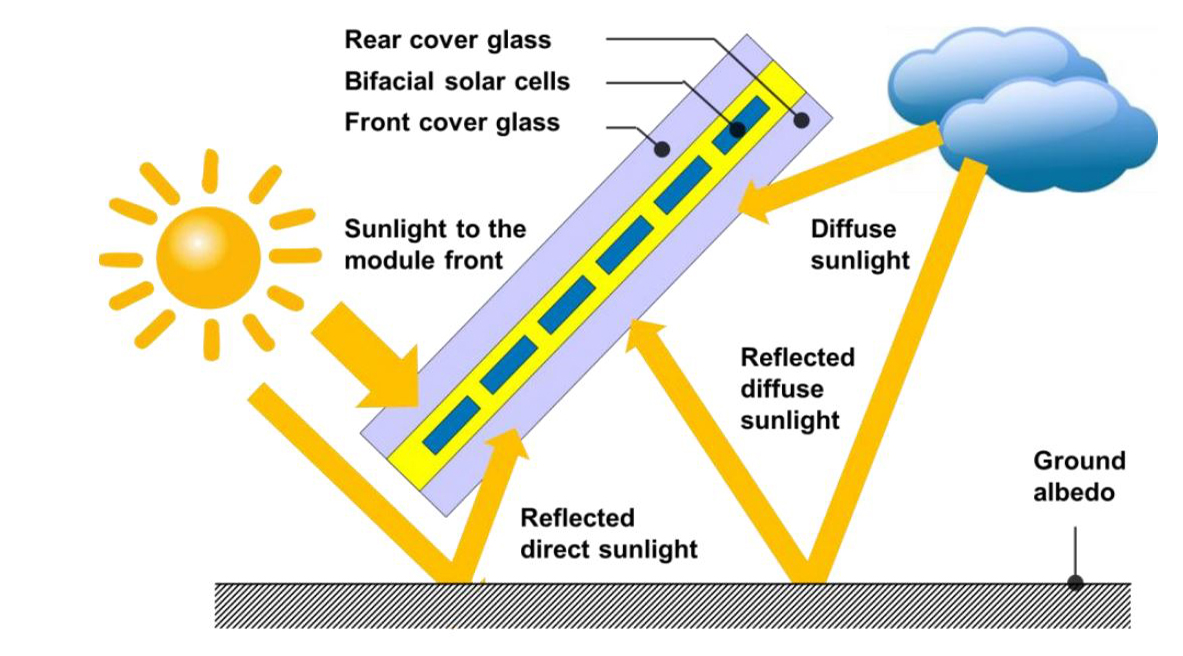
Figure 1: Irradiation on the back side of a panel: https://blog.otthydromet.com/en/albedo-measurement-for-bifacial-pv-modules/
Enabling bifacial in analysis
Enabling bifacial gain in your analysis is easy; Make sure you are using a bifacial panel, and just check the option “Include bifacial gain” under the panel selector. When this is checked, just go ahead and analyse.

Figure 2: Checkbox to tick in order to use bifacial gain
If you do not see a “Include bifacial gain” checkbox, it means that the respective panel is not a bifacial panel. You must then either:
- Choose a bifacial panel (such as the default JASOLAR550) in the drop down menu. Or
- Create a new panel. In order to create a panel, enter the “Manage profiles” modal and then the “panels” tab. Choose the panel you want as a starting point, toggle this panel as “bifacial” and set the bifaciality factor. Then you must save this panel as a new panel. You can then choose to delete the “old” monofacial panel if desired.
Note: Bifacial modeling is complex, and will therefore significantly increase the computation time (it usually takes around 60-70 seconds). The reason is that bifacial modeling considers many different reflections (from the ground, from other nearby rows, etc.), and is therefore resource intensive.
Configure the elevation (/“height above ground”)
In order to get a precise calculation of the bifacial gain, the elevation (other software may name this parameter for “height above ground”) of the panels is of great importance. Therefore, we have introduced this as a new parameter to set in the profile configurations. However, it is important to note that this parameter is different between fixed tilt and single-axis tracker systems. For single-axis tracker systems, you must set a “axis elevation” parameter. The axis elevation is the height from ground to the center of the module (i.e. to the axis). For fixed-tilt systems, the parameter is names “module elevation” and measures the distance from ground to the lowest part of the module. See figure 2 for an illustration.
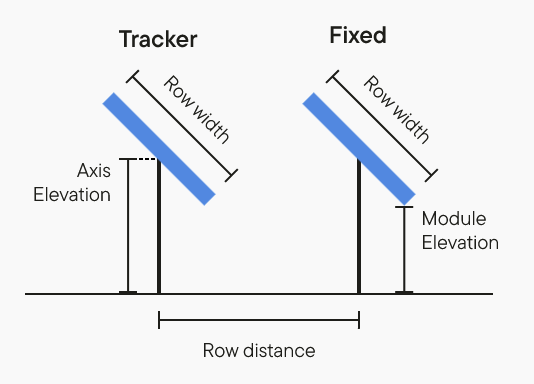
Figure 3: Illustration of axis and module elevation
Note: The elevation (/height above ground) parameter does currently not affect the front side yield calculation.
See the bifacial gain in report
In the report, the bifacial gain is included in the resulting energy yield. The bifacial gain is independently illustrated in the “Losses and gain” diagram in the report.
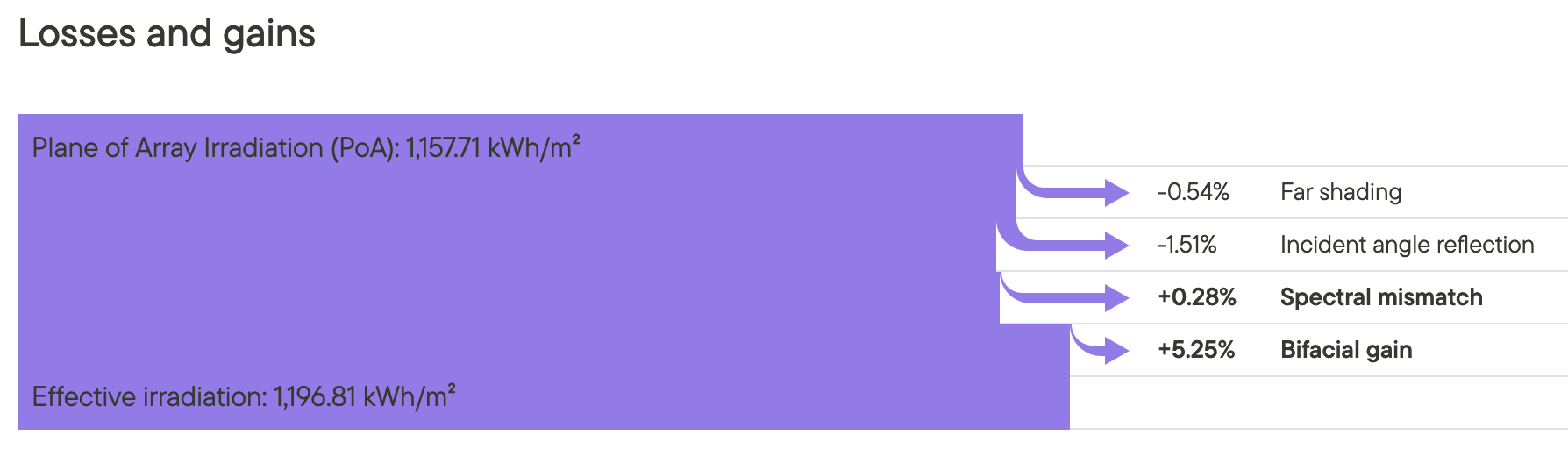
Bifacial gain is here defined as the percentage of added effective irradiation (i.e. after considering the bifaciality factor).
Bifacial gain = (Back irradiation * bifaciality) / (Effective front irradiation)
Where "effective front irradiation" is the front side irradiation after considering AOI and SMM losses.
Results and comparison to PVsyst
Glint uses an implementation of the “pvfactors” model. Compared to PVsyst, the pvfactors model generally give a higher bifacial gain. It is therefore expected that the bifacial gain results in Glint are higher than you would get in PVsyst. The difference varies, but it is not uncommon to get 1-2 percentage points difference. For instance, if you get a 6 % bifacial gain in Glint, you might get 4-5 % bifacial gain in PVsyst.
Technical details, model validation and comparisons
We use the pvlib implementation of the “pvfactors” framework to calculate the bifacial gain. Read more about the framework here. Pvfactors is a view factor model, is well-known and established in the industry. Generally, it is proven to give relatively precise results on bifacial gain.
Several studies compare the different frameworks for estimating bifacial gain. It is worth mentioning that many studies show that PVsyst often delivers conservative results on the back side irradiation. To illustrate, Figure 2 shows the difference in bifacial gain from different models. As figure 2 shows, 1-2 percentage points difference in bifacial gain between PVsyst and pvfactors are expected.
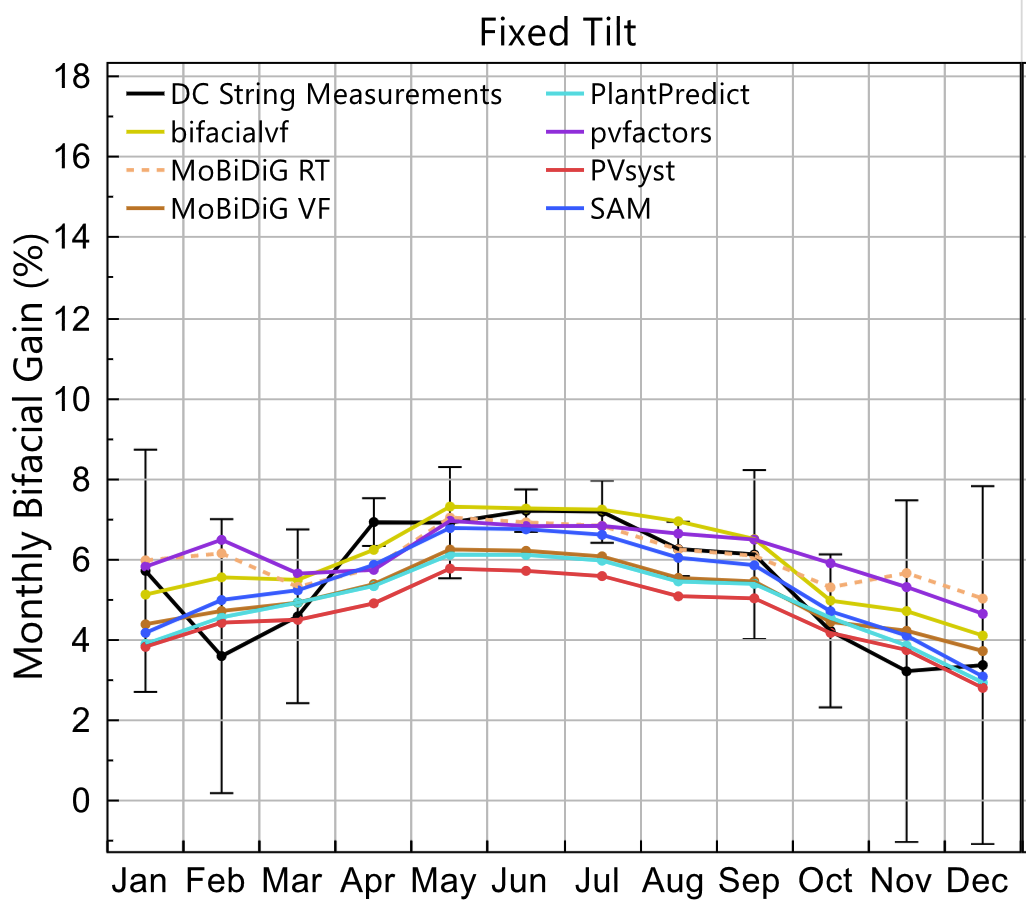
Figure 2: Comparison of different back side irradiation models. Taken from (1).
Studies: Following is a set of studies that validates and/or compares pvfactors with other pv software.
- (1): “Validation of Bifacial Photovoltaic Simulation Software against Monitoring Data from Large-Scale Single-Axis Trackers and Fixed Tilt Systems in Denmark” (2019)
- A Benchmark and Validation of Bifacial PV Irradiance Models (2019): https://ieeexplore.ieee.org/document/8981272
- View Factor Model and Validation for Bifacial PV and Diffuse Shade on Single-Axis Trackers (2017): ****https://ieeexplore.ieee.org/abstract/document/8366704
- A comparison of bifacial PV system modelling tools (2019): http://npv-workshop.com/fileadmin/layout/images/bifiPV/presentations2019/bifiPV2019-CEA_INES_Capelle.pdf
Future work on the topic
Bifacial calculation is a topic that still receives a significant amount of work. Existing models are changed and improved, and new and more precise methods arise. Because of this, Glint may update or change the existing bifacial calculation algorithm. If this occurs, Glint will notify users and provide detailed information about the changes.